Tag: Obsidian

  • How to Use Excalidraw in Obsidian

    How to Use Excalidraw in Obsidian

    I was using excalidraw.com before most people had heard of it. Web architecture, business plans, rough product diagrams, the hand drawn aesthetic made complex things looks way approachable, and the tool itself was fast enough to keep up with my thinking.

    Then I hit the limit as usual.

    Multiple canvases required a paid subscription. Reasonable pricing – probably life changing if you’re using it seriously enough to justify it. But I wasn’t ready to commit though, so I stayed on one canvas, cramming more into it than made sense.

    Then I found the Excalidraw plugin for Obsidian. (life changer)

    Now I create as many canvases as I want, store them directly in my vault, and attach them to the notes they belong to.

    Alright, here’s how to get set up.

    What Excalidraw Does Inside Obsidian

    The Excalidraw plugin for obsidian brings the full Excalidraw whiteboard into your vault as a community plugin. You can create as many drawings as you want – each one saved as a file in your vault.

    Drawings and notes link to each other bidirectionally: a note can display an embedded drawing, and elements inside a drawing can link back to notes in your vault.

    Every drawing is stored as a plain .excalidraw file, readable and portable like any other file in Obsidian. The plugin is free, maintained by a solo developer, and has over 6 million downloads.

    Step 1: Install the Plugin
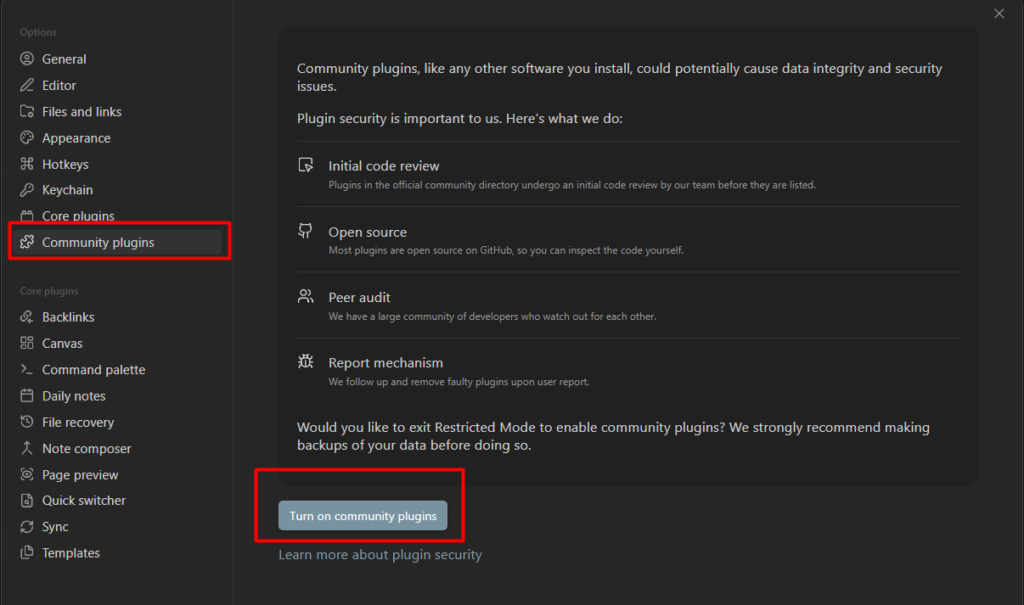
    1. Open Obsidian and go to Settings (gear icon)
    2. Click Community plugins in the left sidebar
    3. If Safe mode is on, click Turn on community plugins to disable it
    4. Click Browse, then search for Excalidraw
    5. Click Install, then Enable

    That’s the whole install. The plugin adds an Excalidraw icon to your left ribbon (a pencil-on-square icon) and a set of commands accessible from the command palette.

    Step 2: Create Your First Drawing
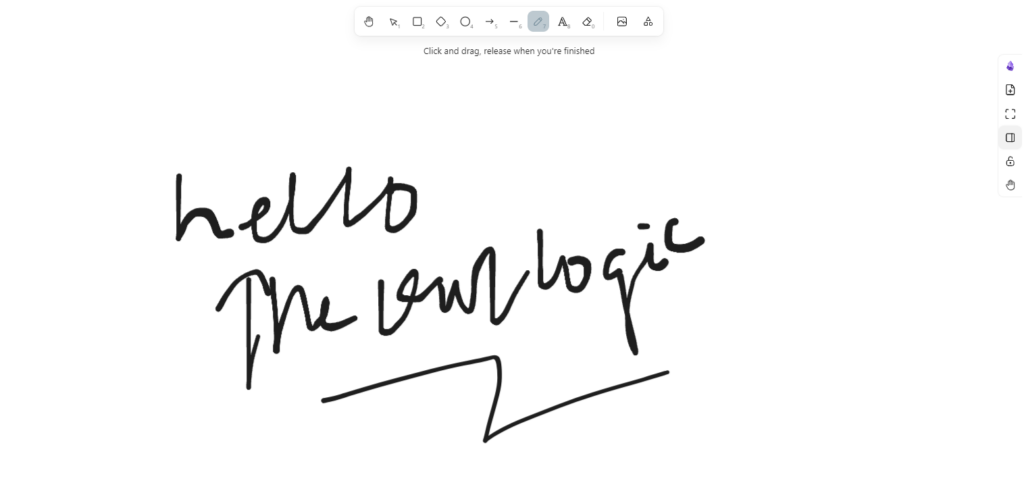
    Open the command palette with ctrl + p (Windows/Linux) or cmd + p (Mac) and type Excalidraw. You’ll see several commands. The two you’ll use most often.

    • Excalidraw: Create new drawing – opens a blank cavas as a standalone file
    • Excalidraw: Create new drawing and embed into active document – creates the drawing and drops an embed link into whatever note you have open

    If you’re starting fresh with no particular note in mind, use the first. If you’re inside a note and want a diagram attached to it, use the second.

    The canvas itself works exactly like excalidraw.com. the toolbar at the top gives you a selection hand (for panning), rectangle diamond, ellipse, arrow,link, draw (freehand), text, and images.

    Hold Space and drag to pan. Scroll to zoom. Double-click anywhere on the canvas to add text directly.

    Read Here: How to Organize Your Obsidian Vault

    Step 3: Embed a Drawing Into a Note

    When you use the “embed into active document” command, Obsidian automatically inserts this into your note.

    ![[Your Drawing.excalidraw]]
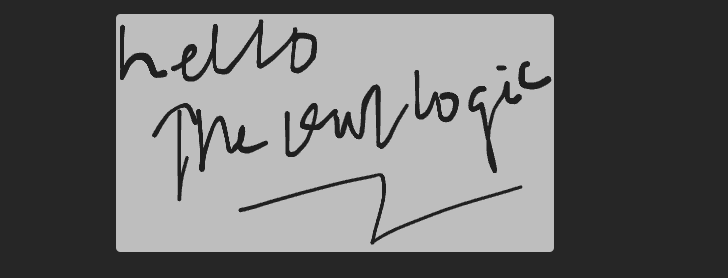
    That’s a standard Obsidian embed. In reading mode, it renders the drawing inline – live, at full resolution.

    Switch bar to the drawing, make a change, save and the embed in your note updates.

    you can control the display width by adding a pixel value though

    ![[Your drawing.excalidraw|600]]

    This renders the drawing at 600px wide – useful when you’re embedding alongside text and don’t want the diagram taking over the whole note.

    If you created a standalone drawing and want to embed in into a note after the fact, just type ![[ in any note, start typing the drawing’s filename, and select it from the autocomplete list. Same as embedding any other file in Obsidian.

    Linking From a Drawing To a Note

    This is the feature that makes the Obsidian plugin genuinely different from excalidraw.com

    inside any drawing, you can make an element link back to a note in your vault. Select any shape or text element, then open its link field by pressing ctrl + k. Type the note name in the wiki format: [[My Note]]. Save.

    In reading mode, that element becomes clickable. Clicking it opens the linked note directly in Obsidian.

    This actually turns a diagram into a navigation layer. Draw a system architecture, link each component to the note that documents it. Draw a business plan, link each section to the relevevant project note.

    The diagram and the the thinking behind it are now connected things – not two separate files you have to keep in sync manually.

    What to Actually Use It For

    The blank canvas question – I literally installed it as you said, now what? – is the place where most people stall. A few things that work well.

    Workflow diagram before you build them

    Before setting up a new automation or planning a project structure, sketch the flow in Excalidraw first. It’s faster than writing an outline and easier to rearrange. Once the flow is clear, build it. The diagram stays attached to the project note as a reference. So literally how I plan a n8n workflow though.

    Business and Content Planning

    Hub and Spoke content maps, product positioning diagrams, audience mapping similar to ICP. Anything where the spatial relationship between ideas matters more than the words used to describe them.

    Quick Visual Thinking

    Sometimes the fastest way to understand something is to draw it. Boxes, arrows, labels. I do these a lot, a lot.

    Obsidian saves my visual thinking as like to think out loud on a canvas.

    One Setting Worth Changing

    Go to Settings > Excalidraw and then search for SVG Ex, you’ll see Auto-export SVG and make sure to enable it.
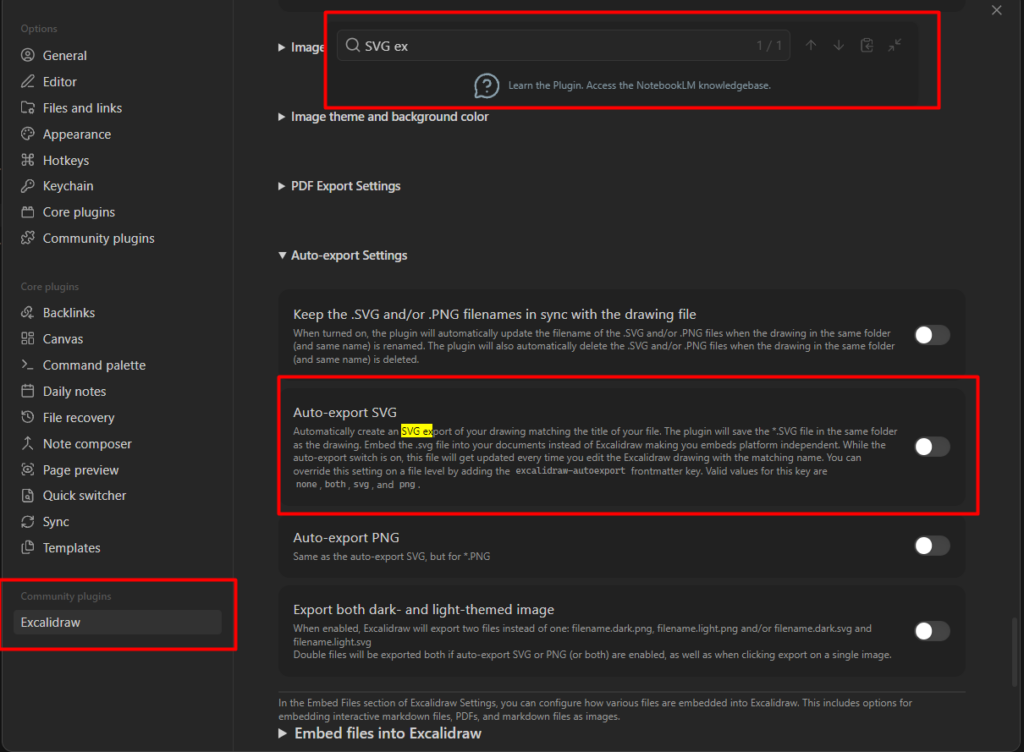
    With this on, every time you save a drawing, Obsidian automatically creates a .svg file alongside it. That SVG is a static image you can use anywhere – paste into a blog post, share it with someone who doesn’t use Obsidian, or embed it on note with ![[draw.svg]] for faster rendering.

    It’s off by default. Turn it on early and you’ll have a clean exports of everything you draw without any extra steps.
  • How to Organize Your Obsidian Vault: A Simple Folder Structure

    How to Organize Your Obsidian Vault: A Simple Folder Structure

    My project vaults are clean. Each one has a clear purpose, a handful of folders, and notes that actually belong where I put them.

    My personal vault is a different story.

    Folders multiplied over time.

    A “Research” folder.

    A “Resources” folder.

    An “Ideas” folder.

    A “Misc” folder

    that became a graveyard. Notes landed in whichever folder felt right in the moment, which meant nothing felt right consistently.

    I’d open the vault, drop something in, and move on – knowing I’d never find it again with any confidence.

    The problem wasn’t that I had too many notes.

    It was that the folder structure had no rules, only vibes. And a structure without rules isn’t a structure – it’s just labeled chaos.

    Here’s what actually works.

    The Short Answer: Here’s the Structure

    obsidian project structure

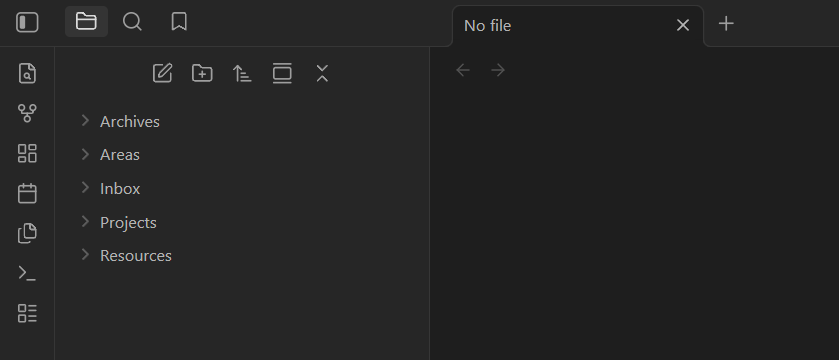
    A simple, maintainable Obsidian vault needs five folders:

    📁 Inbox
    📁 Projects
    📁 Areas
    📁 Resources
    📁 Archive
    

    Inbox is where everything lands first – no sorting required at the moment of capture.

    Projects holds active work with a clear finish line.

    Areas holds ongoing responsibilities with no end date (health, finances, a client relationship).

    Resources is for reference material you’ll return to – not your thoughts, just source content.

    Archive is for anything finished, paused, or no longer active. Notes stay in plain markdown throughout. You move a note by dragging it. That’s the whole system.

    Why Most Obsidian Vaults Fall Apart

    The default move when starting an Obsidian vault is to create folders that mirror how your brain is currently thinking.

    So you make a “Work” folder, a “Personal” folder, a “Books” folder, maybe a “Ideas” folder. It holds for a few weeks.

    Then a note doesn’t fit neatly into any of them.

    You make a new folder. Then another. Then you have twelve folders and no clear rule for which one a note belongs in, so every capture becomes a small decision – and small decisions at the moment of capture kill the habit.

    The core insight is this: folders in Obsidian answer where does this belong, not how does this connect.

    If you’re using folders to capture relationships between ideas, you’re doing the job that links do better. Folders are containers.

    Links are the connective tissue.

    Keep the containers few and obvious. Let links handle everything else.

    What Each Folder Actually Does

    Inbox

    This folder exists so you never have to make a decision when you’re capturing something quickly. A URL you want to read later, a rough idea, a meeting note you’ll clean up – everything lands here first.

    The rule: process Inbox regularly (once a day, once a week – pick one). Move each note to where it belongs or delete it. If Inbox becomes a permanent home for anything, the system breaks.

    Think of it the way you think about automating the boring, repetitive parts of a workflow – the capture step should be zero friction, and the sorting step should happen on its own schedule, not in the moment.

    Projects

    Active work with a specific end state. A client website you’re building. An article you’re writing. A launch you’re preparing for. Each project gets its own subfolder inside Projects.

    The test: does this have a finish line? If yes – Projects. If it’s an ongoing part of your life with no finish line, it’s an Area.

    When a project ends, the whole subfolder moves to Archive. Clean, fast, no decisions.

    Areas

    Ongoing responsibilities. Health, finances, a relationship you’re maintaining, a skill you’re developing. Areas don’t finish – they just continue or they don’t.

    These notes tend to grow slowly and get referenced often. A note on your workout routine, your budget structure, a client relationship log.

    The key difference from Projects: you’re not trying to complete an Area, you’re trying to maintain a standard.

    Resources

    Reference material you didn’t write. Book notes. Saved articles. Research you pulled for a project. Interesting frameworks someone else articulated.

    Resources is a library, not a thinking space.

    Your own analysis and reactions to that material belongs in a note linked from Resources – not inside the Resource note itself.

    Keeping that distinction clean means Resources stays useful instead of becoming a pile of half-processed reading.

    Archive

    Anything that was active but isn’t anymore.

    Finished projects, old Areas you’ve deprioritized, Resources you no longer need.

    Archive exists so you can move things out of your working folders without deleting them – because you’ll occasionally want them back.

    Search works fine across Archive. You don’t need to organize inside it.

    Folders vs. Tags: Where Each One Belongs

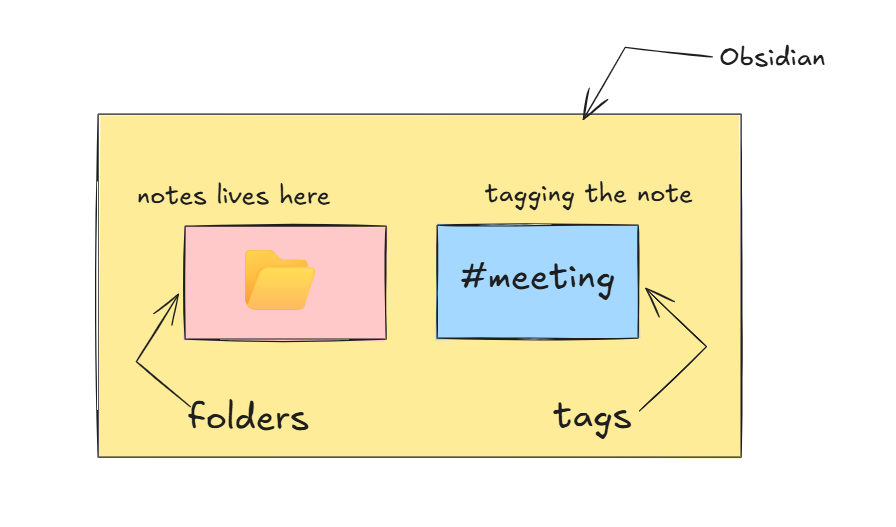
    a diagram differentiating the folders and tags

    A folder answers: where does this note live?

    A tag answers: what kind of note is this?

    A meeting note from a client project lives in Projects/ClientName.

    It might have the tags #meeting and #action-items.

    The folder tells you where to find it in the file tree. The tags let you pull up every meeting note across all projects in a search.

    The practical rule: use folders for location, tags for cross-cutting properties. Tags that duplicate your folder structure (like #projects or #archive) are noise – they don’t add information that the folder doesn’t already give you.

    Where this matters most: status and type. Tags like #draft, #waiting, #review cut across all your folders in a way that a folder never could. That’s where tags earn their place.

    When to Use Links Instead of Folders

    If you catch yourself wanting to put a note in two folders at once – stop. That’s a sign the note should be in one folder and linked from another.

    Obsidian’s whole value proposition is that notes can connect to anything, regardless of where they’re stored.

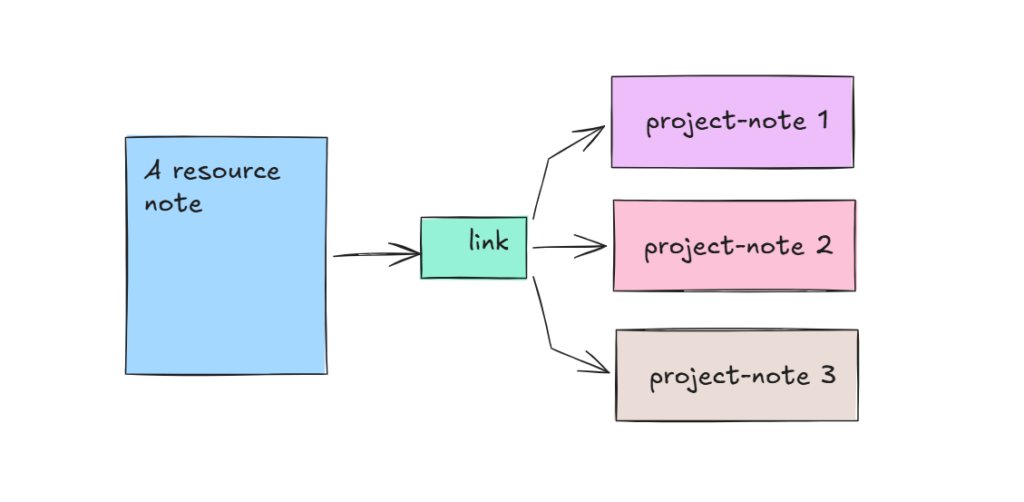
    a diagram shows a resource note can be linked to 3 project notes.

    A Resources note about a writing framework can be linked from three different Project notes, an Areas note on your creative practice, and a journal entry.

    You don’t need copies of it in three folders. You need one note and three links.

    The mental model: if you have more than three levels of folder nesting anywhere in your vault, you’re using folders to do a job that links do better.

    How to Move an Existing Messy Vault Into This Structure

    If you already have a vault with dozens of folders and notes scattered everywhere, don’t reorganize everything at once. That’s how you spend a Saturday moving files and gain nothing.

    1. Create the five folders: Inbox, Projects, Areas, Resources, Archive.
    2. Enable Settings > Files & Links > Automatically update internal links. This makes Obsidian update wikilinks when you move files. Do this before you move anything.
    3. Pick one category to sort first – Projects is usually the clearest. Move everything that’s active project work into Projects/. Create a subfolder per project.
    4. Leave everything else in the old folder structure for now. Add the old folders inside Archive if it helps mentally.
    5. As you open notes over the next few weeks, move them to the right place. Don’t force it all at once.

    One thing to watch: Obsidian updates [[wikilinks]] automatically, but not standard markdown links written as [text](path). If your notes use both formats, check for broken links after any large moves.

    New notes go into Inbox first, always. The structure stabilizes itself once capture is consistent.